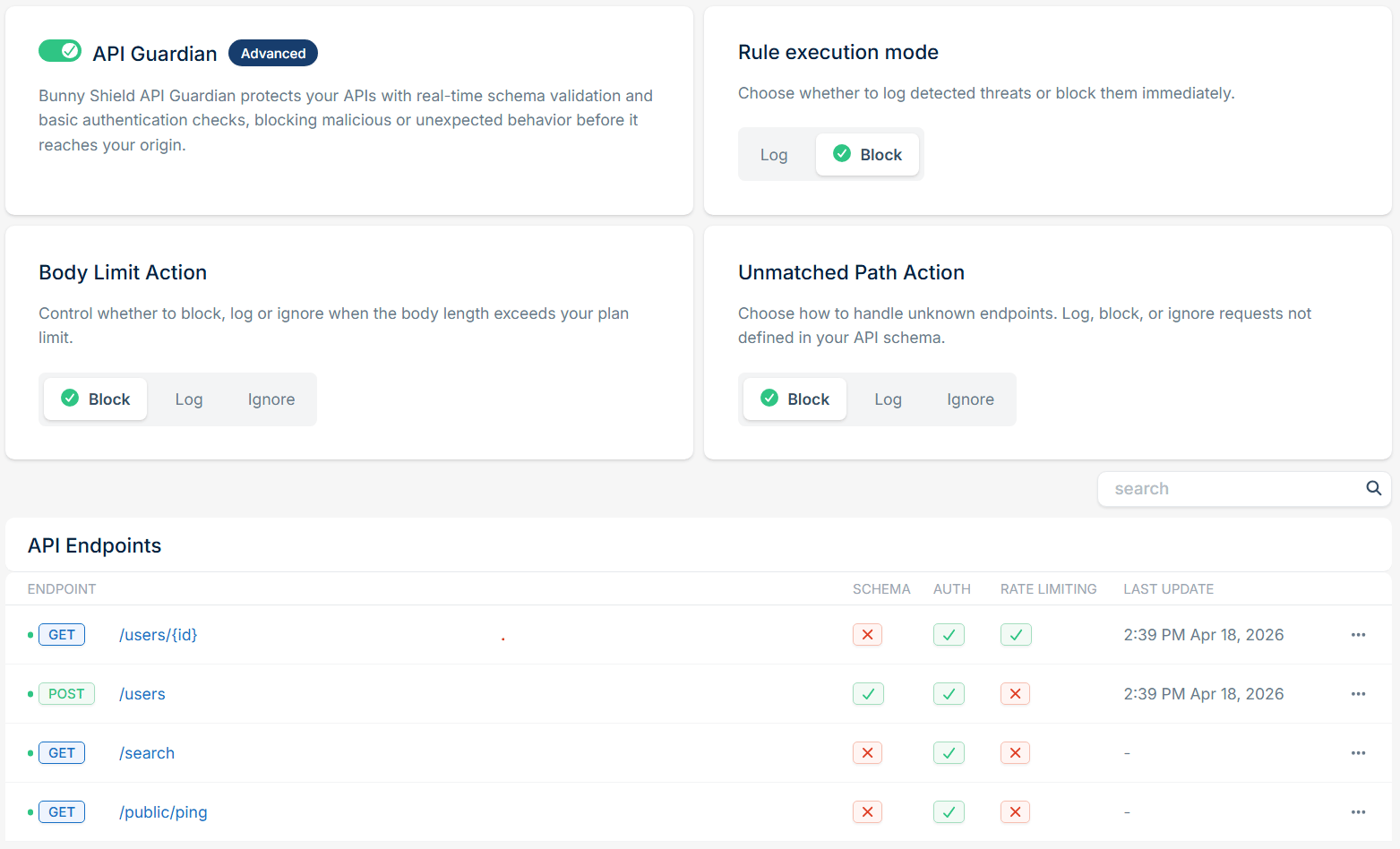
Schema-aware API protection. Bunny Shield enforces your OpenAPI contract at the edge so requests and responses match what your application expects.
API Guardian uses your OpenAPI specification as the source of truth for what your API accepts. At the edge, every request is validated against the schema, authenticated against the configured security scheme, and counted against per-endpoint rate limits before reaching your origin.
API Guardian starts with your OpenAPI schema and transforms it into a real-time enforcement layer at the edge.When a specification is uploaded:
The schema is normalized and processed
Internal references are resolved
Validation rules are compiled into native Bunny Shield protections
Every incoming request is checked against this contract before reaching your origin. Only requests matching your defined API structure are allowed through.Validation includes:
Path parameters to ensure correct structure and types
Query parameters to validate allowed fields and formats
Headers and cookies to enforce required values
JSON request bodies (application/json and *+json) to match schema definitions
Execution mode controls how API Guardian enforces its decisions globally:
Log to observe validation results without blocking traffic
Block to enforce validation decisions at the edge
This setting applies to all validation outcomes and overrides any individual blocking decision, allowing you to safely test API Guardian in log mode before enforcing it.
Not all requests will match a defined path in your schema. The Unmatched Path Action controls how these requests are treated:
Block to reject requests targeting undefined endpoints (subject to execution mode)
Log to record unmatched requests while still forwarding them
Ignore to bypass API Guardian entirely for unmatched paths
Only Ignore lets an unmatched request reach the Managed WAF ruleset; under Block and Log, Managed WAF is skipped. Other Shield features such as Rate Limiting and Bot Detection apply regardless of this setting.Requests that do match a declared path are always handled by API Guardian’s schema validation and path enforcement, instead of the Managed WAF ruleset, to avoid false positives common with structured API traffic.
Unmatched path handling is not limited to literal path definitions.API Guardian automatically allows endpoints referenced by your authentication schemes, so login and token-exchange flows work without manual schema duplication.For OpenID Connect:
The provider’s discovery metadata is fetched
Advertised endpoints (authorization, token, userinfo, JWKS, etc.) are automatically allowed
Keys are kept up to date as they rotate
This allows login and token exchange flows to function correctly while still enforcing schema validation across your API.
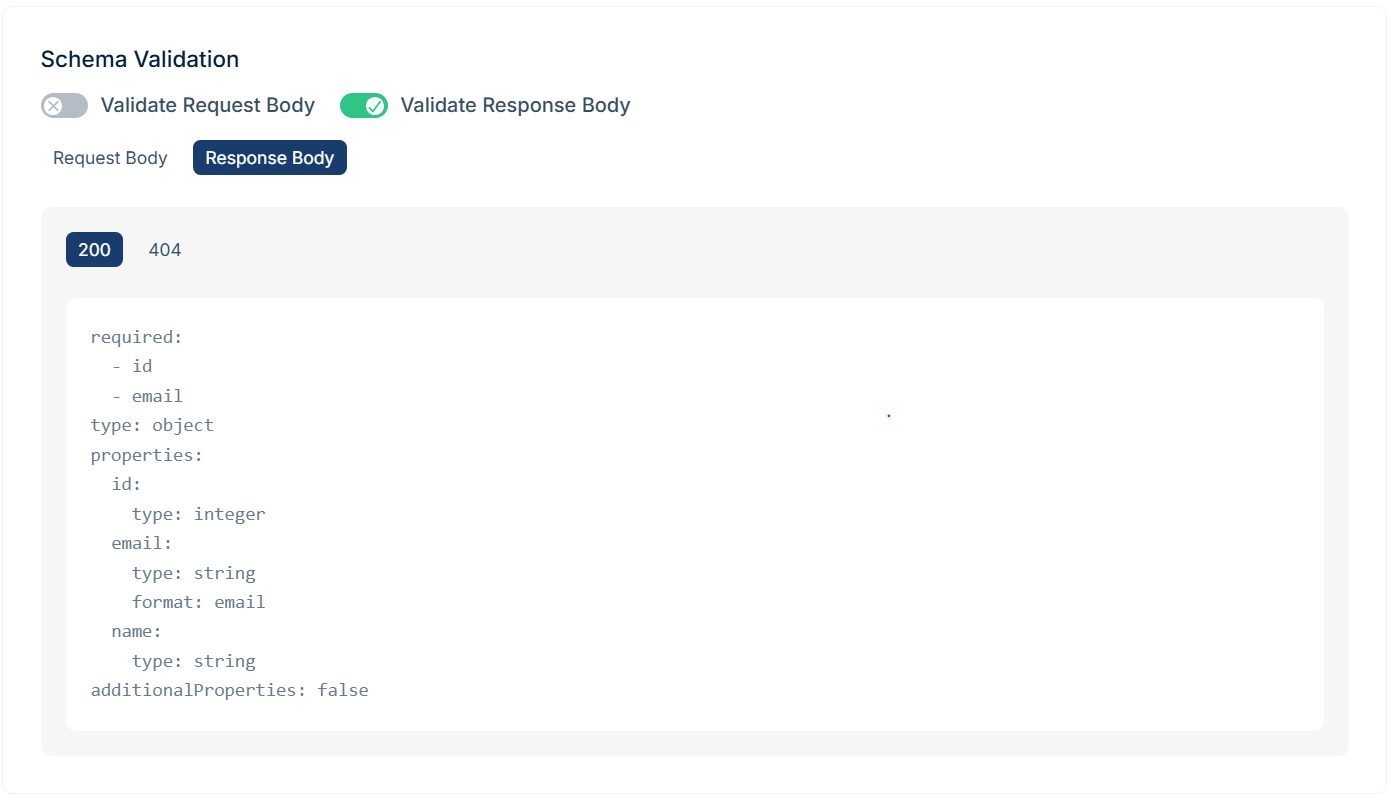
APIs don’t just define what they accept, but also what they return.API Guardian can validate responses against your schema on a per-endpoint basis. This helps prevent:
Unexpected fields being exposed
Incorrect response formats
Edge-case behavior leaking unintended data
Responses are validated before leaving your infrastructure, ensuring consistency between your API contract and real-world behavior.
API Guardian enforces authentication requirements defined in your OpenAPI schema before requests reach your origin.Supported authentication methods include:
API Keys (headers, query parameters, cookies)
HTTP Authentication (Bearer and Basic)
OAuth2
OpenID Connect
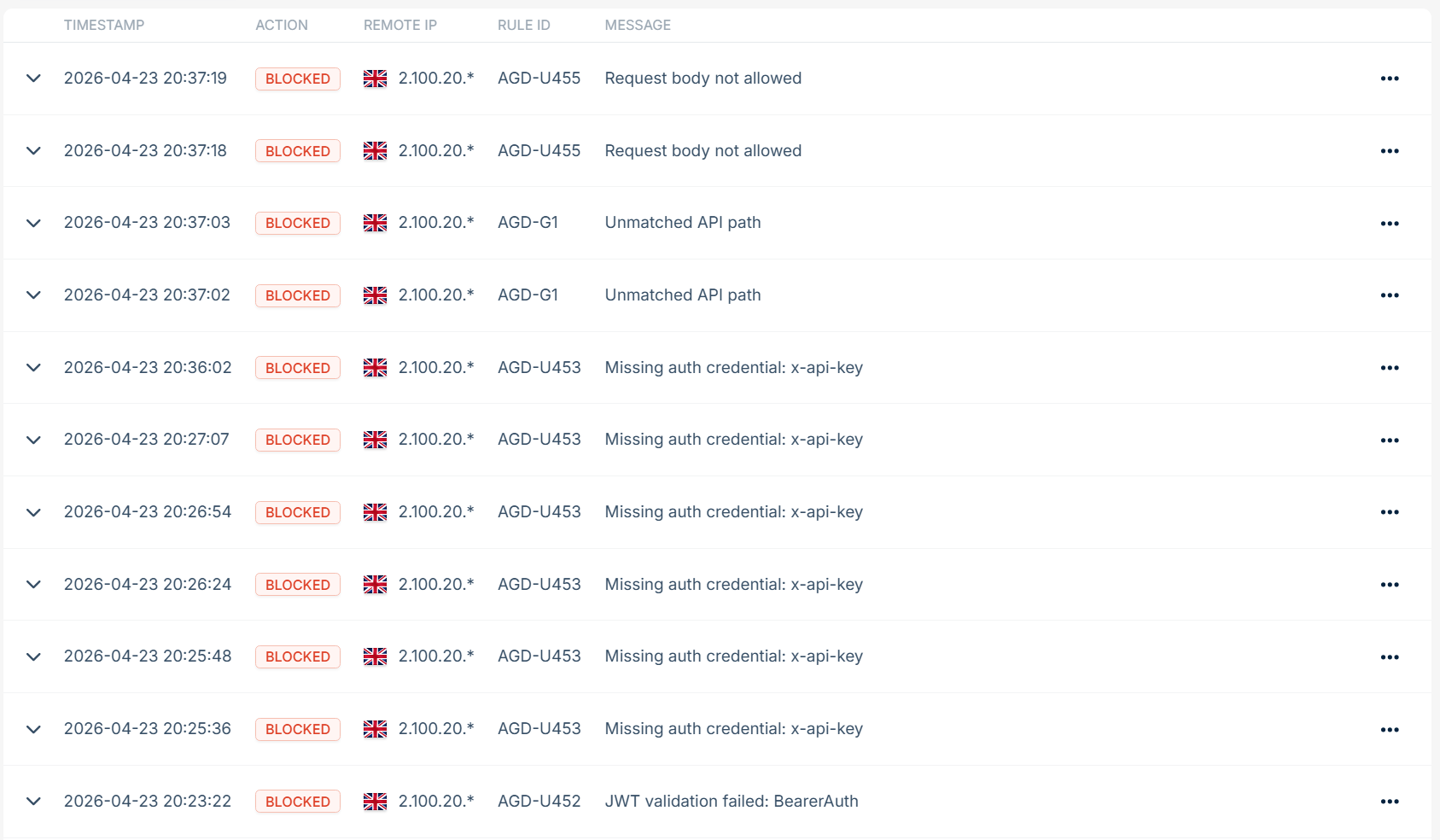
Requests missing required credentials are rejected immediately, filtering out a large portion of automated and low-effort attack traffic.
JWT structure and expiration are validated for bearerFormat: jwt
Signature verification is performed for OpenID Connect providers using public-key algorithms
JWKS endpoints are automatically fetched and refreshed
Tokens must match the expected issuer and signing algorithm
Supported algorithms include RSA and ECDSA (256, 384, 512-bit). Invalid, expired, unsigned, or tampered tokens are rejected at the edge before reaching your application.
Schema validation ensures requests are structurally correct, but some attacks rely on valid structure with malicious content.API Guardian allows you to combine schema enforcement with targeted deep inspection:
Select specific query, path, header, or cookie parameters for inspection
Detect patterns like SQL injection and cross-site scripting (XSS)
Apply deep inspection only where needed, reducing unnecessary overhead
You can also define inspection rules directly in your OpenAPI schema using the x-bunny-shield extension.This allows you to attach detection logic to specific fields: